Whether your homestead sits on a few acres or right in the middle of a suburban neighborhood, winter has a way of arriving faster than expected and demand more than you anticipated. The good news is that preparing for the cold season doesn’t have to feel like a burden.
With the right approach, it becomes an activity of connection full of purposeful work that the whole family shares. Here’s a practical guide to getting your homestead ready before the first frost of winter hits.
Cutting, Splitting, and Storing Firewood
For homesteaders who rely on a wood-burning stove or fireplace, firewood is everything. Running short mid-winter isn’t just inconvenient, it’s outright dangerous. The goal is to have your full wood supply split, dried, and stacked well before temperatures start to drop.
For those who burn wood for heat, you know the importance of having enough firewood prepared for a rough winter. When your burning wood all day and using the embers to keep the home warm at night, you want to have a stockpile of wood available. Split wood is an absolute necessity to prepare for winter weather, and occasionally the last minute spring storms.
A Modern Method for Splitting Wood
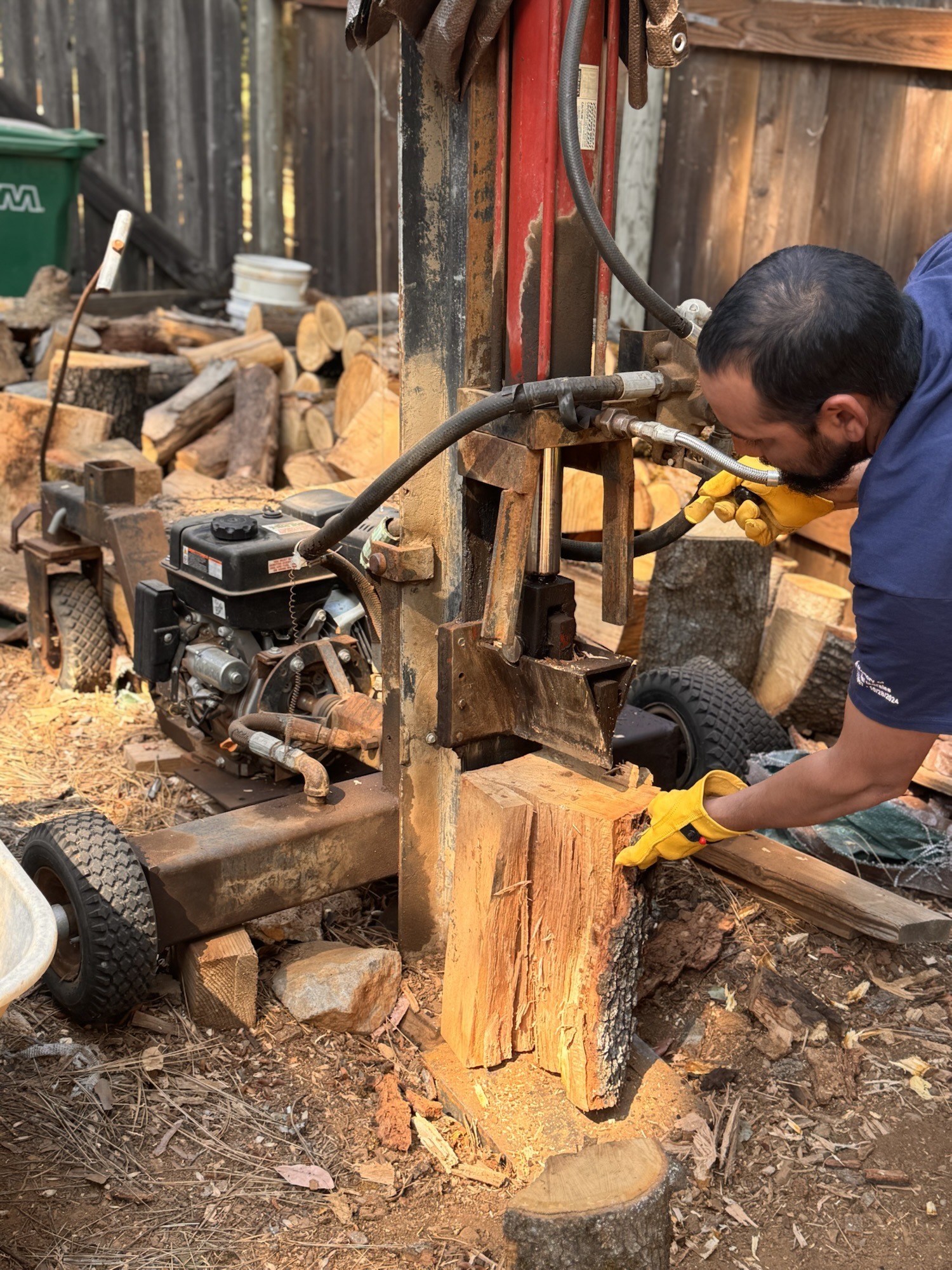
For small amounts of wood, a splitting axe and a solid wood block work just fine, and there’s real value in teaching kids the discipline of manual labor. But if firewood is your primary source of heat through winter, you’ll want to save your body for the long haul. A gas-powered log splitter is one of the most practical investments a homestead can make. It dramatically reduces the risk of repetitive strain injuries, allows older family members to stay involved, and makes it possible to process a season’s worth of wood without injury.


We were fortunate enough to find a used one we could fix up, and its been a life saver. This tool has saved our hard working men from significant pain and exhaustion.
The process with using the machine does take a little longer but what it uses in time it saves by reducing the risk of injury and supporting people who may not be able to split wood by hand. Especially when you need to split enough wood to last you through winter and beyond.
Choosing the Right Wood
Not all firewood is created equal. The species you burn matters a great deal for both efficiency and safety. As a general rule, firewood needs at least 6–12 months of seasoning (drying) before it’s ready to burn in your home. Freshly cut “green” wood has a moisture content above 50%, which causes incomplete burn quality, excessive smoke, and dangerous creosote buildup in chimneys.
- Singleleaf Pinyon Pine is one of the best softwoods available in the western U.S. Its extremely high resin content and dense wood give it a heat output that rivals some hardwoods. It requires 9–12 months of seasoning and produces a unique and beloved aroma. The Fire Pit Store
- Ponderosa Pine is widely available in California and only needs 6–12 months of drying time. It’s a lower-density softwood, so it burns faster. It’s great for getting a fire going, but not ideal for overnight. Native Foods Nursery
- Hardwoods like oak, ash, and hickory burn longer and hotter than most softwoods and are worth mixing in for sustained overnight heat if their available.
Different types of wood have different drying periods before its fit to be burned. I don’t know the species but I have heard of some types of pine that should be seasoned for 2-3 years to ensure the moisture content is low enough for quality firewood.
Woods You Should Never Burn
Knowing the species of wood that grows in your surroundings is important safety information. Several common trees and shrubs produce toxic compounds that become highly dangerous when burned. Never burn any of the following near humans or animals, thee smoke can cause serious respiratory damage, skin and eye irritation, and in some cases can be life-threatening Wood-heating-solutions:
- Oleander
- Yew
- Manchineel
- Poison Ivy, Poison Oak, or Poison Sumac
- Mexican or Brazilian Pepper Wood
If you’re unsure about a type of wood, check before burning. The risk is simply not worth taking. I have several books on plant identification, and when I was growing up we used Audubon books to help identify plants and insects. Since the creation of apps, I’ve started using the PictureThis as a plant identification app. Something like this will help you create a library of the plants native to your homestead and can help inform on their potential uses and dangers.
Storing Your Firewood
Where you store your wood depends on your location, local wildlife, pest pressures, and personal preference. Many homesteaders in areas prone to wood-boring insects (like much of California) keep their main firewood shelter at a distance from the house to avoid inviting pests indoors.
Some people prefer to store it in their garage to keep it dry and easily accessible. Most people I know have a covered area outside to store firewood for a couple of reasons.
A covered outdoor shelter with good airflow is ideal: it keeps rain and snow off the wood while allowing continued drying. Stack wood off the ground (on pallets or rails) and cover the top while leaving the sides open for ventilation. Storms in this area, usually last about 3-4 days, so anticipating how much wood will be needed when a storm hits is part of the winter planning. From the wood storage area, we keep about a weeks worth of wood near the house.
An ATV with a small wagon is a fantastic tool for hauling wood from splitter, to shelter, to house. Especially on properties where a truck can’t easily maneuver. It’s practical, efficient, and genuinely fun.


The ATV has been one of the best investments we made towards our homestead. Really making a difference in the time it takes to get the firewood moved and stacked, and allowing us to bring a little fun into the chores.
Creating family chores helps teach our children how to prepare a homestead for each season, ensuring that each person participates in the preparation to the best of their abilities.
Hunting and Foraging: Stocking the Pantry
For many homesteading families, hunting is as much about tradition and connection as it is about putting food on the table. Even in suburban California, where hunting isn’t a survival necessity, it’s a meaningful way to teach our children about the natural world, self-reliance, and the cycle of life.
Hunting season preparation includes scouting your area, knowing your prey, and making sure we stay compliant with licenses and tags well in advance. California has restrictions when it comes to hunting, so its important to follow the regulations and be prepared to show all the necessary paperwork.
The California Department of Fish and Wildlife is the place to find information on what it takes to hunt in this state. An ATV is also an invaluable tool for hunting. It can access terrain that even a four-wheel-drive truck can’t reach, improving your odds and making it easier to transport a harvest back to the homestead. In this day and age, hunting is one of those activities that infuses ancestral traditions with some modern technology.
Beyond hunting, fall is the prime season for foraging wild herbs, roots, and medicinal plants before the cold sets in. Teaching children to identify deer tracks versus bear tracks, recognize edible plants versus poisonous ones, builds skills that last a lifetime. It creates a teaching moment that re-connects them to generations who did the same long before modern grocery stores existed.


The hunt is not always successful, but it brings the family together and connects us to our roots, putting into practice some forgotten skills.
Preserving the Harvest
A successful hunt or forage leads directly into another essential homestead chore: preserving and storing food for the winter. Smoking and drying meat are traditional preservation methods that require a consistent heat source, which brings you right back to your firewood supply. Canning, creating a root cellar, and dehydrating vegetables and herbs round out the pantry for the months ahead.
Snow Removal: Don’t Get Caught Off Guard
Even if you don’t live in heavy snowfall area, a surprise winter storm can quickly limit your resources and cut off access to suburban convenience. A little preparation goes a long way when your trying to access your generator, woodpile, animal shelters, or vehicle.


Shoveling is the most accessible and affordable method. All you need is a quality snow shovel and manual labor. One surprisingly effective trick for shoveling snow; spray the blade with cooking oil or non-stick cooking spray before you start. The oil prevents snow from sticking to the shovel, so it slides right off instead of clumping up and doubling your effort.
Snow blowers are a worthwhile investment for homesteaders who see regular snowfall. In our area a mid-range single-stage electric or gas blower handles the snowfall well, but if you get big snow storms a two-stage gas model handles heavy, wet snow and larger areas. The cooking oil trick works on snow blower too, just apply cooking oil to the chute and auger blades for a smoother snow removal process.
ATV’s with snow plow attachments are a popular choice on larger properties where there’s significant driveways, paths to outbuildings, access to water sources or animal enclosures.
Power Outages: Be Ready Before the Storm
Winter storms and power outages go hand in hand. If you rely on a gas generator or solar battery system for backup power, make sure you can actually reach it when the time comes. That means keeping the path to your generator or battery box clear. Being ready for the snow removal is a priority.
Fuel storage also matters. Keeping your generator fueled and having several days’ worth of fuel on hand before a storm is forecast, is essential when roads are closed for unknown amounts of time. For solar battery systems, check charge levels heading into the overcast season.
Making Chores a Family Affair
Here’s something worth saying about homestead chores; they don’t have to be a dull. Some of the best family memories come out of working together toward increasing and maintaining sustainability. There’s something deeply satisfying about stacking wood you know is going to keep your family warm all winter, or sitting down to a meal made from food your family hunted, preserved, and prepared together.


Watching kids be involved in the whole process by riding along on the ATV, stacking wood, or helping pack up smoked meat these traditions build work ethic, practical skills, and confidence. It gives children a sense of real contribution to the household, not just chores for chores’ sake.
Grandparents and older family members bring knowledge and experiences that can’t be found on video games. The stories that come out of a wood-splitting afternoon or when scouting for deer tracks are irreplaceable.
Have Some Family Fun with Homestead Chores!!!
Note: Regulations, app features, and pricing are subject to change. Always verify current information directly with official sources before making decisions based on this article.Disclosure: Some of the links in this post are ‘affiliate links’. This means if you click on the link and purchase the item, I will receive an affiliate commission.
References:
Cornell Cooperative Extension
https://warren.cce.cornell.edu/natural-resources/heating-with-wood/storing-and-drying-firewood
California Department of Fish and Wildlife (CDFW)
https://wildlife.ca.gov/Licensing/Hunting
National Audubon Society Field Guide to California (Peter Alden & Fred Heath, Knopf) https://amzn.to/3MstUOU
PictureThis Plant Identifier App (Glority Global Group Ltd.) https://apps.apple.com/us/app/picturethis-plant-identifier/id1252497129
The Fire Pit Store – Seasoning Firewood: Optimal Times for Various Wood Types https://www.thefirepitstore.com/product-review-news/seasoning-firewood-optimal-times-for-various-wood-types/
University of Maryland Extension – Measuring Wood Moisture & Drying Time for Hardwood Tree https://extension.umd.edu/sites/extension.umd.edu/files/publications/MeasuringWoodMoisture_FS-1074.pdf
Leave a Reply