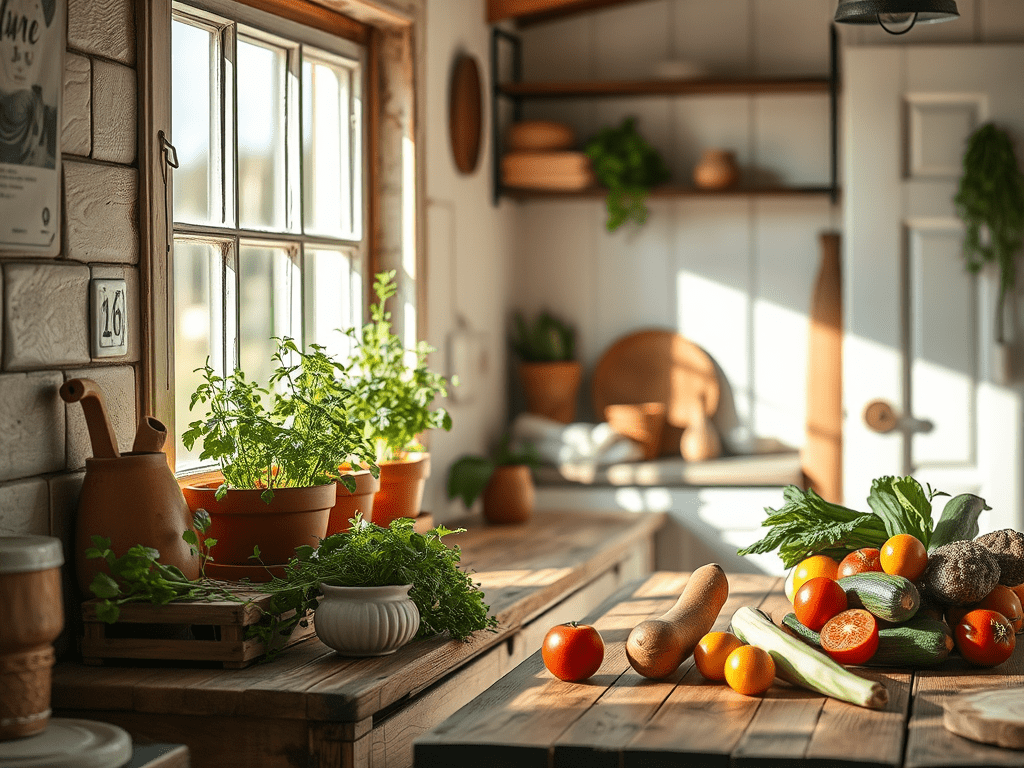
What Homesteading Really Means
Here’s the truth about homestead living: it doesn’t mean you need to overhaul your entire life overnight. You don’t have to jump straight into living off-grid, or starting a vegetable garden and canning your own produce, although I’ll admit, that part is genuinely fun once you get there.
Homesteading is really about increasing your awareness of sustainable practices, what you do and how you do it. It’s a mindset shift more than anything else. When you start paying attention to your daily habits and their impact, you naturally begin making choices that are better for both your health and the environment.
The beauty of suburban homesteading is that it meets you where you are. Whether you live in an apartment, condo, townhome, or suburban house, you can start incorporating sustainable practices into your everyday life. And as you do, you’ll begin to see and feel the positive effects. Research shows that engaging in environmentally friendly activities like sustainable practices helps lower stress levels and enhance overall mood [1].
ONE SMALL STEP FOR HEALTH
Starting a suburban homestead and sustainable practices doesn’t require a big investment or dramatic lifestyle change. Simple shifts can make a real difference:
Using natural light instead of lamps during the day reduces energy consumption and helps regulate your circadian rhythm. Morning sunlight exposure is essential for regulating our sleep-wake cycle and maintaining a balanced circadian rhythm [2]. Studies have shown that exposure to natural light improves sleep quality, hormone regulation, and overall mood [3]. As Dr. Nayantara Santhi explains, “Apart from vision, light serves a critical non-visual function by regulating our physiology and behavior in myriad ways” [4].
Growing herbs on a windowsill brings fresh flavors to your cooking and improves indoor air quality. While early NASA research suggested houseplants could purify air, more recent studies have found the benefits are modest in typical home environments [5]. Plants do however offer other significant benefits: they boost mood, reduce stress, add humidity to dry environments, and provide fresh ingredients for cooking [6].
Cleaning with natural products, like vinegar, baking soda, and essential oils, reduces your exposure to toxic chemicals found in conventional cleaners. Many household cleaning products contain volatile organic compounds (VOCs) and other harmful chemicals that contribute to chronic respiratory problems, allergic reactions, and headaches [7]. A 2023 Environmental Working Group study found that conventional cleaning products may release hundreds of hazardous VOCs, while green products emit significantly fewer [8].
Even changing up your grocery shopping habits can have an impact. Shopping at farmers markets, choosing seasonal produce, buying in bulk to reduce packaging, or simply meal planning to minimize food waste; these practices help support sustainability while reconnecting you with your food sources and the natural rhythms of the seasons.
It’s truly amazing how these subtle changes can increase your overall health and wellness. When you start living more intentionally, you often find that you sleep better, have more energy, and feel more grounded. Sustainable living practices provide a sense of accomplishment and connection to something greater than ourselves [9]. These small adjustments can transform an ordinary suburban home into a space that’s both beautiful and environmentally mindful.
OUR JOURNEY: HOW WE STARTED
My husband and I moved far away from where we grew up and started building a life that looked quite different from how we were raised. It’s not that there was anything wrong with our upbringings, our parents did the best they could. But we both longed for a life a little closer to nature, and we were willing to start small to get there.
Our first home together was an apartment in a small complex with just two windows. Limited space and light didn’t stop us, we set up a stand-up greenhouse in the dining area and started growing herbs. This is also where I began practicing meal planning, partly to save money, but also to be more intentional about what we ate and where our food came from.
Next, we rented a small one-bedroom home on a shared property with a tiny patio. That small outdoor space became our testing ground. We started strawberry plants, grew cucumbers, expanded our herb collection, and added flowers to support pollinators. Every inch of that patio was put to use.


This was also the home where I started learning about cleaning without toxic chemicals, a shift that became especially important when our baby arrived. I wanted to create the safest possible environment for our growing family, so I dove into research about natural cleaning methods and discovered how to use herbs for more than just flavor in recipes. I learned about their medicinal properties and how they could support our health in gentle, effective ways.
Looking back, each home taught us something new and prepared us for the next chapter. The limitations we faced in those early spaces actually sparked our creativity and helped us appreciate every opportunity we had to connect with nature, no matter how small.
THE NEXT CHAPTER: OUR SUBURBAN HOMESTEAD
When we finally moved to our first suburban homestead, our first project was the garden. We live in a rather windy area, and safety was a priority—just last year, a large branch fell from a tree on a property down the street. Fortunately, nothing was damaged, but it was a good reminder to take precautions.


We trimmed back the trees near our home and built raised garden beds around them. Since the trees were right next to the house, we wanted to make sure we did everything possible to stabilize the trunks while still being able to use the space productively.
One of the delightful surprises of gardening in California has been discovering the wide variety of native plants that naturally appear. Ice plant popped up in our planters the very next season without any effort on our part. It’s become lovely ground cover that doesn’t require much water and produces beautiful purple flowers. Finding plants like these that thrive naturally in your climate is one of the joys of working with nature instead of against it.

Using native plants in your garden helps reduce water consumption and maintenance while supporting local pollinators like bees, butterflies, and hummingbirds. Native plants are adapted to local environmental conditions and require far less water than non-native species [10]. Research by entomologist Doug Tallamy has shown that native oak trees support over 500 species of caterpillars whereas non-native trees may host only a handful [11]. Native plants provide nectar for pollinators including hummingbirds, native bees, butterflies, moths, and bats, and they provide protective shelter for many mammals [11].
I’ve made it a habit to look up plants I find around the neighborhood to see if they have value for the homestead. Some can be used for tea, others have medicinal purposes I’m still discovering, and many simply provide habitat and food for beneficial insects and wildlife.
DISCOVERING NEW RESOURCES
I love researching plants and their uses in various books. My herb library has expanded quite a bit over the years. One of the first books I ever bought on the topic was The Complete Guide to Edible Wild Plants. It was fascinating to compare the pictures and descriptions to the plants growing in my own yard, and it opened my eyes to how much food and medicine is growing all around us.
But if I’m honest, I’m not the best at accurately identifying plants based solely on book descriptions and images. Field guides are wonderful, but plant identification requires careful observation and experience. That’s why I cross-reference my discoveries with a plant identification app. I’ve been using PictureThis as my go-to resource for identifying the plants around our home.
Sometimes I’ll look at a plant and feel absolutely certain I know what it is, but once I snap a picture, the app tells me something completely different. Frankly, I trust the technology more than my own limited knowledge. I’m no botanist, and I’ve only just begun my research on herbs and edible plants. The app has been a great resource for identifying plants that may be toxic to humans or animals.

Like this MilkThistle, which has pretty flowers but tons of thorns and is toxic to humans. It grows all over the yard in the winter.
The combination of old school learning through books, new technology through apps, has deepened my appreciation for the plant world. Every walk around the neighborhood becomes an opportunity to learn something new, and our garden has become a living classroom for the whole family.
FINDING YOUR PATH
This is just our beginning, your journey will look different, and that’s exactly as it should be. You can start with whatever will benefit you or your family. There’s no right or wrong entry point into sustainable living.
My family was in desperate need of changing our diet and discovering more whole food recipes and food preservation methods. That became our focus, and it’s led us down wonderful paths; learning about fermentation, canning, dehydrating, and cooking from scratch with seasonal ingredients.
Some family members are starting their sustainable living journey with self-care products and DIY beauty. They’re making their own lotions, soaps, and skincare products using natural ingredients. I love this approach! It’s an area I’m also learning about and slowly incorporating into my own routine. Knowing exactly what goes into the products you put on your skin is empowering, and many homemade alternatives work better than their conventional counterparts while being gentler on both your body and the environment.
Other people might start with energy conservation, composting, reducing plastic use, or creating wildlife habitats in their yards. Others will dive deep into renewable energy systems, and still many more will focus on minimalism and reducing consumption. Each path is valid, and they all contribute to a more sustainable world.
Spending time in nature and connecting with the natural world has a positive impact on mental health. Studies have shown that spending time in green spaces can reduce stress, anxiety, and depression and improve overall well-being [12]. As one expert notes, “engaging in sustainable living practices provides tangible benefits for mental well-being. These actions offer a sense of accomplishment and connection to something greater than ourselves” [9].
The key is to start somewhere, anywhere, and build from there. Don’t wait for the perfect time or the perfect circumstances. Begin with one small change that feels manageable and meaningful to you. As that becomes second nature, add another. Before you know it, you’ll have transformed not just your home, but your entire relationship with the natural world.
REFERENCES
- The Connection Between Mental Health and Sustainability: How Taking Care of the Planet Can Improve Your Well-being. (2024, November 6). Zero Circle. https://blog.zerocircle.eco/en/the-connection-between-mental-health-and-sustainability-how-taking-care-of-the-planet-can-improve-your-well-being
- 5 Scientifically Proven Benefits of Morning Sunlight for Sleep-Wake Cycle. (2025, November 13). Amerisleep. https://amerisleep.com/blog/benefits-of-morning-sunlight-for-sleep/
- Wirz-Justice, A., et al. (2019). Effects of light on human circadian rhythms, sleep and mood. Somnologie, 23(3), 147-156. https://pmc.ncbi.nlm.nih.gov/articles/PMC6751071/
- Huberman Lab. (2025, February 27). Using Light for Health. https://www.hubermanlab.com/newsletter/using-light-for-health
- American Lung Association. (n.d.). Getting into the Weeds: Do Houseplants Really Improve Air Quality? https://www.lung.org/blog/do-houseplants-really-improve-air-quality
- Good Housekeeping. (2025, February 4). NASA Study on Air-Purifying Houseplants Debunked: Here’s the Truth. https://www.goodhousekeeping.com/health/a63664656/can-houseplants-purify-the-air/
- American Lung Association. (n.d.). Cleaning Supplies and Household Chemicals. https://www.lung.org/clean-air/indoor-air/indoor-air-pollutants/cleaning-supplies-household-chem
- Environmental Working Group. (2023, September). Cleaning products emit hundreds of hazardous chemicals, new study finds. https://www.ewg.org/news-insights/news-release/2023/09/cleaning-products-emit-hundreds-hazardous-chemicals-new-study
- Zero Circle. (2024, November 6). The Connection Between Mental Health and Sustainability. https://blog.zerocircle.eco/en/the-connection-between-mental-health-and-sustainability-how-taking-care-of-the-planet-can-improve-your-well-being
- Tunley Environmental. (n.d.). Native Plants in Enhancing Biodiversity. https://www.tunley-environmental.com/en/insights/native-plants-in-enhancing-biodiversity
- Audubon. (2024, November 6). Why Native Plants Matter. https://www.audubon.org/content/why-native-plants-matter
- Northern Inyo Healthcare District. (n.d.). Explore the Health Benefits of Sustainable Living. https://www.nih.org/nihd-news/2023/april/health-benefits-of-sustainable-living/
Disclosure: Some of the links in this post are ‘affiliate links’. This means if you click on the link and purchase the item, I will receive an affiliate commission.

Leave a Reply