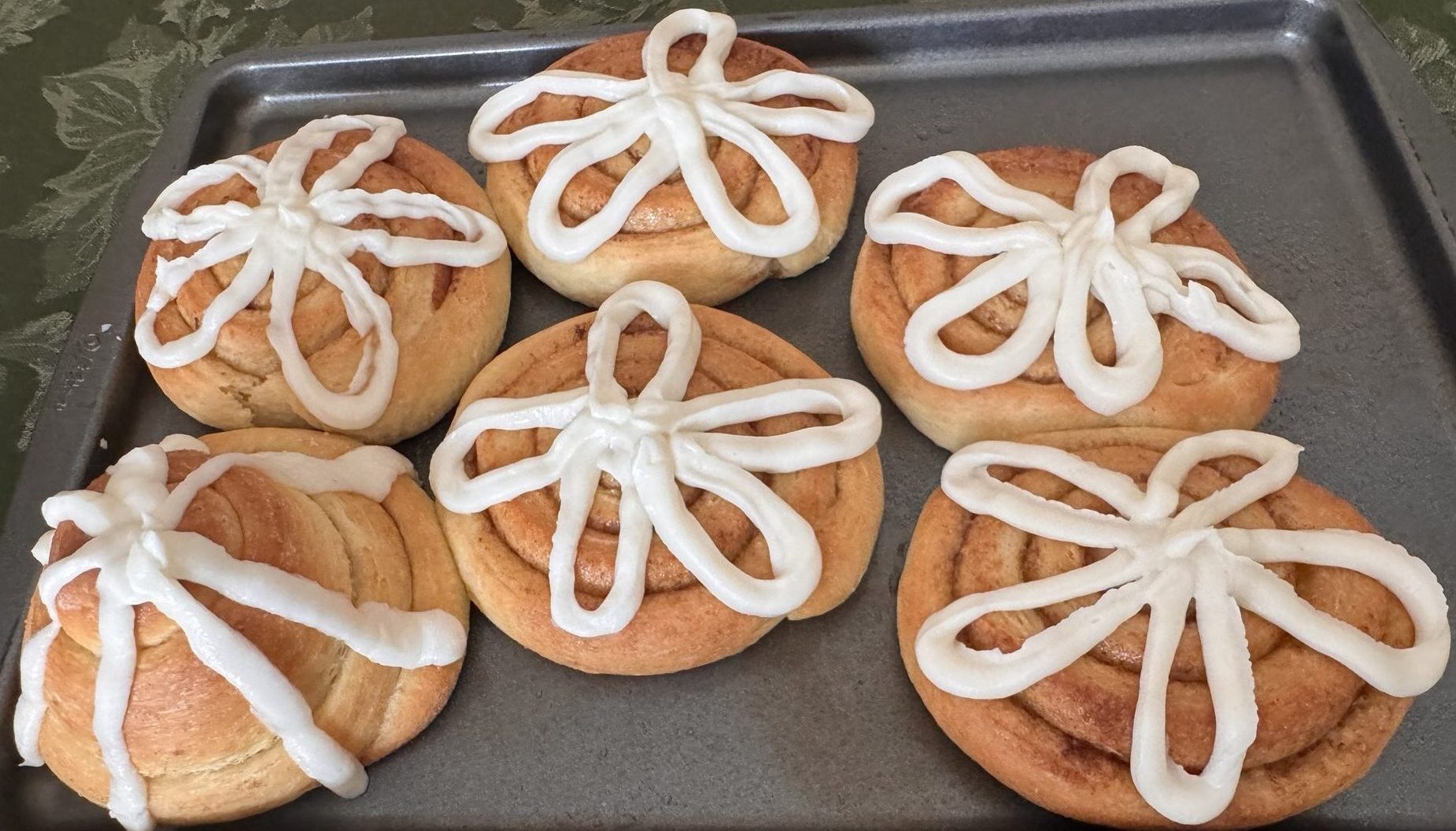

Cinnamon rolls are one of the greatest memories I have of my childhood. During school breaks and holidays, we would make cinnamon rolls in the morning for breakfast.
I’ve carried on that tradition with my own family. I’ve just modified it a little by switching from store-bought, ready-to-bake to a homemade recipe that includes a kid-friendly life lesson. Plus, the kids make them extra special with sprinkles and swirls.
If I’m honest, cinnamon rolls were one of the very first foods I started making from scratch, outside of meat and vegetables. As a kid, we used the store-bought version; premade, presliced, and ready to bake. But then I started learning about the ingredients used to make them shelf-stable for stores, and that’s when I realized we needed to make some changes.
I began my homestead and sustainable living journey, starting with bread. First was sandwich bread, then cinnamon rolls. I never realized how relatively easy it was to make these foods, as long as you set aside a little time. And the health benefits of making them from scratch far outweigh the time it takes.
I love being able to name exactly what’s in my food, without sounding like a scientist running an experiment, which is exactly how I feel when I’m reading ingredient labels on shelf-stable foods.
Homemade vs Ready-to-Bake
So, just to do a quick comparison between homemade cinnamon rolls and ready-to-bake cinnamon rolls. Homemade cinnamon rolls contain approximately 10 ingredients, while ready-to-bake versions contain around 30. That difference alone is worth paying attention to. Store-bought versions often include preservatives, added sweeteners, and dough conditioners to extend shelf life. These added ingredients are not necessary and do nothing to support your health. Read about added ingredients in the sister post on homemade frosting. It pairs lovely with cinnamon rolls.

Research from nutrition experts at Nutrisense confirms that baking your own bread-based foods is generally healthier because it eliminates the artificial preservatives, emulsifiers, and excess sugars commonly found in mass-produced products. Cinnamon rolls are a dessert food and only meant for once in a while, but there are differences between homemade and ready-to-bake that impact our health.
Here are some of the differences;
Homemade Cinnamon Rolls
- Protein 7 grams
- Fat 8 grams
- Sugar 18 grams
- Sodium 290 mg
Ready to Bake Cinnamon Rolls
- Protein 4 grams
- Fat 14 grams
- Sugar 26 grams
- Sodium 540 mg
The Secret to Light and Fluffy Rolls
I started with a recipe from my favorite Christmas cookbook; as I practiced, I began making some adjustments to the recipe. The first thing I noticed was how heavy some cinnamon rolls can be. I prefer them light and airy, and getting there requires the right balance of flour and yeast. The ratio plays an important part in creating a light, fluffy dough fit for cinnamon rolls.
Here’s the science behind why it matters so much.
Yeast is a living organism that eats the sugars present in flour and produces carbon dioxide (CO₂) gas as a byproduct, which makes the dough rise. This isn’t a bad byproduct; the CO₂ is what gives you the air bubbles that make bread light and fluffy, it’s what’s called an open “crumb,” and that makes a cinnamon roll feel pillowy rather than dense.
Too little yeast means not enough CO₂ is produced, which results in a dense, tight “crumb.” Too much yeast burns through the dough’s sugars too fast, producing gas faster leading to large irregular holes, a sticky texture, and a strong, sour aftertaste. 123 Food Science.
In my own baking adventures, I’ve run into both problems. Baking is truly a chemistry experiment. I’ve seen some recipes use less yeast per cup of flour and some use more, but for doughs like cinnamon rolls, a good general guideline is 2 tablespoons yeast per 4 cups of flour to get that fluffy, open crumb.

While sandwich bread does better with a lower ratio of about 2 tablespoons to 6 cups. At least that’s been my experience.
Why rise time is important
In this recipe, once the dough is ready to rise, I separate it into batches; usually two, which makes a little over a dozen rolls depending on your desired thickness. Once separated into large bowls and covered with a cloth, I let the dough rise for 1½ hours. But that’s just the first rise. A good dough needs kneading and rising at least twice.
One of the reasons I was so resistant to making my own bread products was rise time. It isn’t just a waiting game it’s when the real magic happens. And I was nervous about making mistakes, maybe just a little perfectionism lol.
But I learned that during fermentation, food science researchers noted that the time it takes to allow for the rise process deepens the flavor and softens the texture which doesn’t happen during shorter rise times. It just doesn’t give the dough enough time to fully develop, leaving the rolls dense and doughy inside.

A proper first rise of 60–90 minutes at room temperature allows the CO₂ to fill in evenly throughout the dough. The second rise, after shaping the rolls, takes another 30–45 minutes and is equally important; it lets the cut rolls puff back up before the heat of the oven sets them permanently.
Over-proofing is a mistake I have made more times than I care to admit. It causes the dough to collapse and flatten during baking and I’ve had more than a few baked goods sink on me. Over-proofing weakens the dough structure until it can no longer hold the CO₂ gas, and that’s when your rolls go flat.
I’ll be honest: managing rise time was my biggest struggle. I’m not naturally the most organized person, but getting my kids involved made all the difference. Knowing I wanted to put my best foot forward in changing my lifestyle and that I was teaching my children something genuinely valuable, forced me to think about what I needed to do for success.

We started using a timer for the rise time, and I personally started using a planner for all my routines. Now, my kids and I make the best cinnamon rolls during school breaks for the perfect family treat on slow, relaxed mornings.
Save them for later.
One of the best parts about making cinnamon rolls in large batches is being able to freeze them and have them ready for another day. We need to let them cool completely and then decorate them with icing and sprinkles.

Once the icing sets, I use the vacuum sealer to pack individual rolls into the freezer for when we are short on time. All the joy of a homemade morning, with almost none of the effort the second time around.

Classic Cinnamon Rolls
Equipment
- 2 Large Mixing Bowls
- 1 Sauce Pan
- 2-3 Large Baking Sheets
- 1 Electric Hand Mixer
- 1 Whisk
Ingredients
Cinnamon Roll Dough
- 8 cups Organic All Purpose Flour
- 1/2 cup Organic Granulated Sugar
- 2 tsp Sea Salt
- 4 tbsp Dry Active Yeast
- 1 1/2 cups Raw Milk or your preferred milk
- 2 sticks Organic Unsalted Butter
- 1 cup Filtered Water
- 4 Eggs
Cinnamon Filling
- 2 sticks Organic Unsalted Butter
- 1 cup Organic Brown Sugar seperated into 2, 1/2 cups
- 4 tsp Cinnamon separated in half
Instructions
- In a saucepan combine milk and butter and heat until it reaches a light simmer, stirring frequently to ensure a thorough mix.
- Allow the mixture to cool until warm, not hot. Add the water, yeast, sugar, eggs, and salt. Wisk mixture until smooth.
- In a seperate mixing bowl, combine 4 cups of organic all purpose flour and pour in the mixture.
- Using an electric mixer, mix until a thin dough forms.
- Slowly add the remaining 4 cups of flour and hand kneed until a robust dough forms.
- Seperate the dough into two large bowls and cover with cheese cloth or papertowels, let rise for 1 1/2 hours.
- Roll out each bowl of dough into a rectangular shape seperately.
- Melt two sticks of butter and lightly brush butter onto the shaped dough.
- Combine 1/2 cup of brown sugar and 2 tsp of cinnamon powder for each batch of dough.
- Sprinkle the mixture across the rectangle
- Roll up the dough into one long wrap, and cut dough into 1" thick slices
- Place the cut slices on a greased baking pan and let rise for 45 -60 minutes.
- Bake rolls at 350℉ for 15-20 minutes
- Remove cinnamon rolls and let cool before topping the rolls with homemade frosting.
Notes


Disclosure: Some of the links in this post are ‘affiliate links’. This means if you click on the link and purchase the item, I will receive an affiliate commission.
References:
Modernist Cuisine — cited for the CO₂/gluten science explanation, since they’re a highly respected culinary science authority. It reinforces your yeast description with the specific mechanism (bubble formation, gluten web, etc.)
123 Food Science — backs up your point about too much yeast leading to sour flavor and structural breakdown
ScienceDirect — adds academic weight to the over-proofing section with the distinction between gas production vs gas retention, which actually explains your sink-and-flatten experience really well
Nutrisense — a nutrition/health resource that validates your ingredient-count comparison and the health case for going homemade
Living Bread Baker — supports the cold overnight fermentation bonus tip with specific science (acetic acid development = deeper flavor)

Leave a Reply