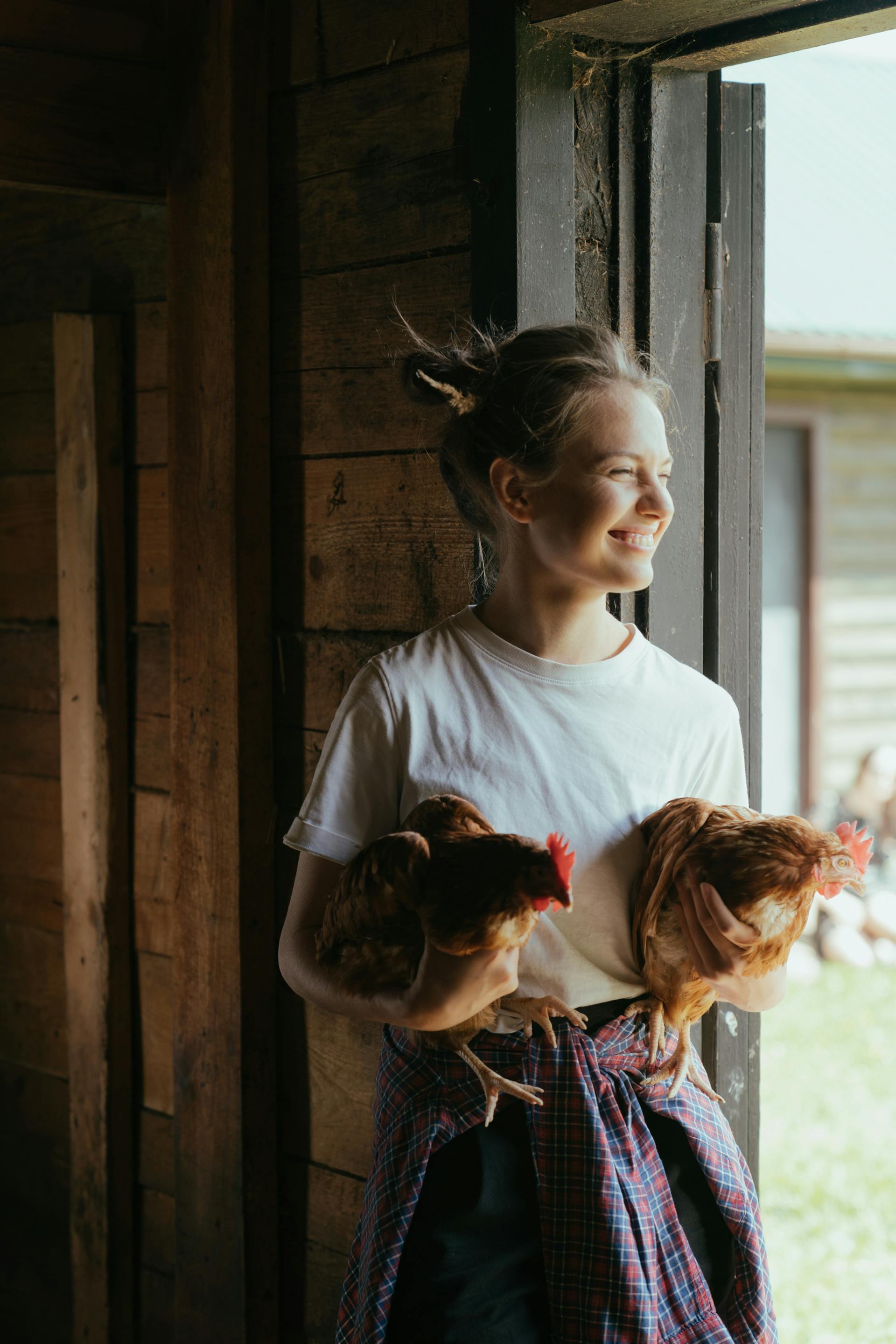
There’s something sacred about homesteading — appreciating early mornings, the small miracle of a growing seedling, and the fulfillment found in daily routines. Even in suburban spaces, these simple moments remind us that a sustainable self-sufficient life isn’t about acreage; it’s about intention.

Homesteading begins with small steps. First think sustainability, what can we do to decrease our family’s reliance on outside sources for daily needs. Think about what that is and where your family could start.
Prioritizing Necessities
For example, my list would include food, water, cleaning/maintenance, climate control in the home, and health/wellness. Now, things that I can support independently on a suburban homestead and I consider top priorities are food, cleaning/maintenance, health/wellness. Because I live in the suburbs, my home is supported through the city with climate control and water through utilities. So heat, air conditioning, gas, water, and garbage are all considered “on-the-grid.”
Internet is a personal preference, and definitely considered a “on-the-grid” utility.
What can we start doing to reduce the disposable mindset and replace it with a cycle based mindset.
Selecting a starting point
Where you start with your homesteading journey is about identifying personal priorities. Maybe you are having health issues and want to start with medicinal resources. You can start with holistic medicine and learning about herbs there uses and health benefits.
Perhaps your first priority is to replace toxins in your home, so you might focus on sustainable cleaning solutions. Products with truly natural ingredients or that are plant based. You might consider replacing current items with ones that are biodegradable or compostable to reduce toxic waste.
If your looking for ideas on how to get started, I love books. They are truly one of my favorite collections, and Heirloom Skills by Rydell and Herdevall has some great starter suggestions. Or if you are more of a technology person Pinterest is a good resource as well 🙂
My family chose food as our first priority. My kids are constantly asking for snacks and are still small and growing like weeds. So I started replacing grocery store items with homemade items. Like bread, fruit snacks, taquitos, and other snack foods my kids are constantly craving. The more I got them used to the homemade version, the less they asked for the grocery store version.
This made me think about how I was shopping and what I can do to change the way I selected food and other items from the store. It also made me think about where my products come from, and who/what I am supporting financially.
Assessing your space
The starting point for your homesteading journey is looking at your current space and what you have chosen as your top priority. Apartment living doesn’t usually include a garden area to support growing your own food, but you could start will herbs on the windowsill, this is where I started. You might try learning to preserve the food that you do buy to reduce food waste.
Each homesteading task connects us to the cycles of nature and teaches patience, stewardship, and gratitude. The rewards aren’t just measured in food on the table, but in the satisfaction that you are caring for your family and yourself with purpose.
Just because you don’t have space for livestock or get your water and power from the city, doesn’t mean you can’t practice and build the skills necessary to live the homestead lifestyle.
Building a Suburban Homestead
Homesteading on the grid brings its own set of priorities and challenges. Our family is transitioning to a lifestyle of natural traditional living, but my husband and I both have full time jobs so living in the suburbs is a necessity right now.

We found that a suburb is the perfect place to start this transition and practice the skills of homesteading. I started with a windowsill herb garden, just growing the herbs that I used the most often in my family dinners. I also had some succulents for air quality.
Our current home has a backyard which we promptly started using for gardening, as you can see in the picture above we finally had space to create a strawberry patch. And the journey to growing some of my own food began.
If you’d like to read more about the garden check out Starting the Homestead Journey: One Garden Bed at a Time
In my opinion, fostering a love of sustainable living is the first step in the homesteading journey. Develop the skills to make meals from basic ingredients, make your own cleaning products, and reduce the number of products made from non-compostable materials. Create your own cycle.
Sharing Our Journey
In our opinion homesteading isn’t about scale or even complete disconnect. It’s about learning, adapting, and celebrating our own progress — no matter how small. Whether you’re growing herbs in a planter box or collecting eggs from your first coop, you’re building a life that values simplicity, connection, and care for the land.
Every homestead, suburban or rural, starts with a spark of interest, a love for the outdoors, and a desire to reconnect with traditions. I was not taught the art of caring for a home. Traditional homemaking methods like the value of home cooked meals, self-care, or natural cleaning are things I’m learning as an adult. These are things I became interested in and wanted to learn, now I want to pass these skills on to the next generation.

Stepping away from instant gratification, and the lure of having things be easy. It’s something we have to want. I’m coming to find out that these skills build character and appreciation. Traits that are more valuable than I ever realized and I want my kids to learn and practice these skills and build character traits.
I hope your homesteading journey is as fulfilling and life changing as ours.
Disclosure: Some of the links in this post are ‘affiliate links’. This means if you click on the link and purchase the item, I will receive an affiliate commission.

Leave a Reply