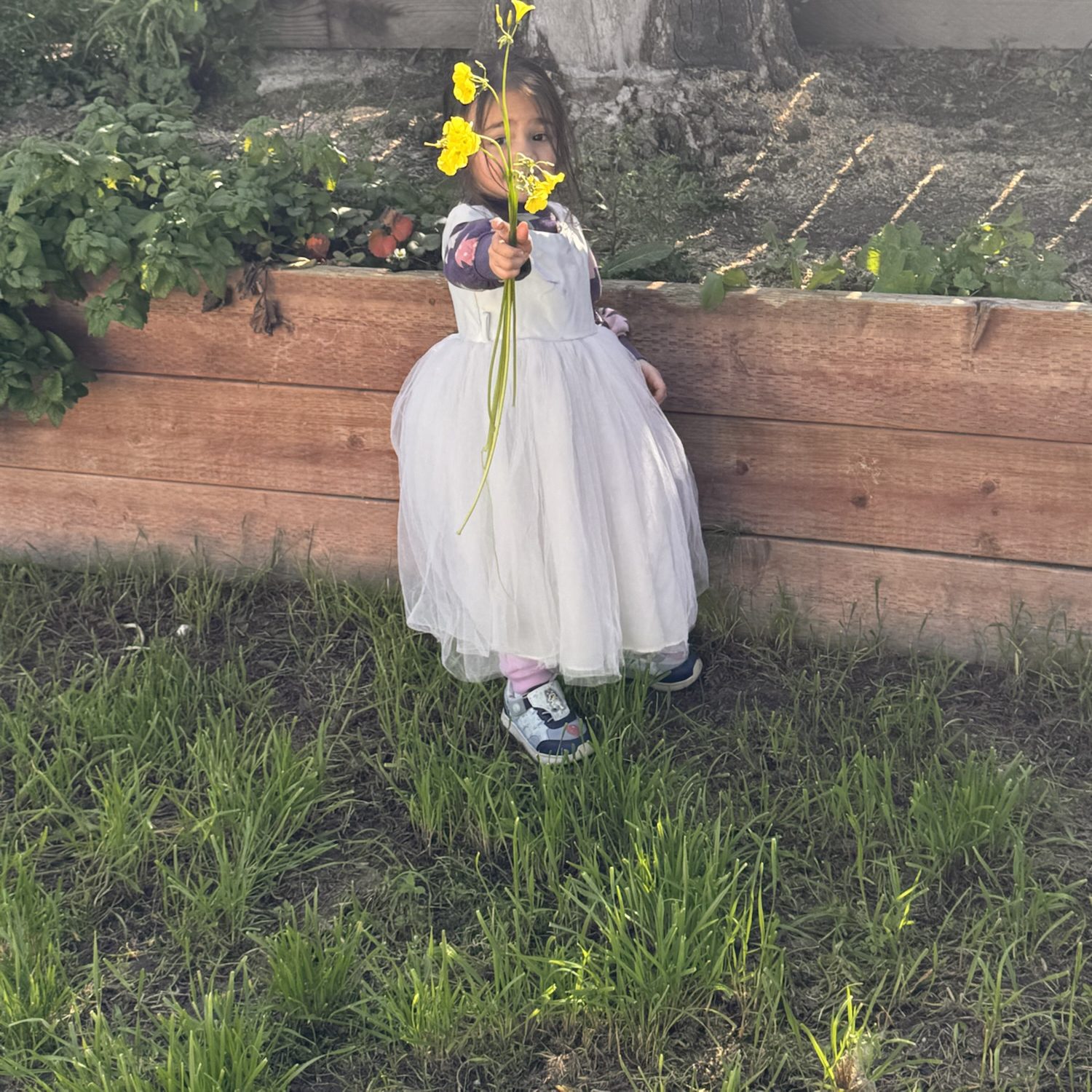
An education starts in the home. We as parents are the first teachers for our children. Teaching good character begins with our values and teaching sustainability is how we use our resources.
As parents, we want our children to develop good moral character and we have chosen a suburban homestead as the classroom for our family education.
I love to garden, and I love creating whole food recipes and snacks for my kids; so that is where our family started. Learning about the food chain together as a family is one of the most rewarding ways to practice sustainable living, teaching both children and parents about the cycles of nature.
Have you ever paused to notice how everything in nature moves in cycles? It’s not just plants or insects, we are all shaped by the flow of the natural world. Researchers continue to deepen our understanding of how emotional health connects to physical health, and how both influence development. When we slow down enough to recognize these cycles we can change them for the better.
Cycles are everywhere.
Personally, beginning the journey to a homestead lifestyle has taught me some emotional habits that I needed to change. Like the idea that meal time should be quick and easy.
Cooking: Where I Started
When we were single and living with family, we went out to eat a lot. Later, when we started out on our own we realized how much it impacted our budget and how we needed to make shift to get to where we wanted to go. We switched to home cooked meals. But honestly, I really didn’t know anything about cooking. I could make scrambles eggs and boxed macaroni and cheese.
I like many of us turned to Pinterest for ideas, and started teaching myself to make home cooked meals. Soon realizing what it meant to plan meals, and make the grocery shopping fit into a budget.
After I had children I realized what an impact my eating habits had on my family. I was now responsible for the health and nurturing of very small humans. Scary!!! At first.
Developing Homestead Cooking
Now I was set on ensuring these little ones got the best nutrition I could provide. We started with purchasing organic foods, because what we put into our bodies really does make a difference in how our body develops and functions.
“Reviews of multiple studies show that organic varieties do provide significantly greater levels of vitamin C, iron, magnesium, and phosphorus than non-organic varieties of the same foods. While being higher in these nutrients, they are also significantly lower in nitrates and pesticide residues.” (Crinnion, W. J., 2010).
The first foods my kids ate on a regular basis were fruits and vegetables, so we started paying close attention to the “Dirty Dozen” when shopping, and we got creative about making organic eating work on a real budget. By the time my daughter was two, she was right beside me in the kitchen, stirring, tasting, and helping assemble snacks. It turns out, this was one of the best decisions we made. Research shows that children who participate in meal preparation are more willing to try new foods and tend to develop healthier dietary patterns over time (Journal of Nutrition Education and Behavior, 2018).


We got lots of ideas from the book Awesome Edible Kids Crafts by Arena Blake. Super fun food art projects.
Starting a Garden
When our family graduated from windowsill herbs to a small backyard garden, I started researching what plant varieties would actually thrive in our region and our soil. We weren’t in a position to buy garden soils, so we had to work with what we had. I made my best guess at first, but if you’d like to know exactly what kind of soil you’re working with, a simple pH soil test like the one from Garden Tutor is a great starting point.
That process led me to investigate seeds: which herbs, fruits, and vegetables are best suited to our climate, and what the difference is between organic and heirloom varieties. (You can read more about that in my post, “How to Select Seeds.”)
Home gardens reduce reliance on big food corporations, cut waste, and reconnect us to the natural cycles that sustain life. Growing your own food, even on a small scale, promotes mindful consumption and a deeper appreciation for where our food comes from. As the National Gardening Association notes, home food gardening is one of the most direct ways families can take control of their food quality while reducing their environmental footprint. Every small step towards self-sufficiency is a step in the right direction.


Turning the Homestead Into a Classroom
For homestead families, sustainable gardening becomes a living classroom. Families who garden together foster a love of nature and respect for natural resources early in childhood. Michigan State University Extension notes that gardening with children supports physical, cognitive, and social development all at once, from strengthening fine motor skills to building curiosity, patience, and an understanding of natural systems.
Our family has focused on teaching our children how grow food, why composting matters, and how gardens can help pollinators keep ecosystems thriving. These early lessons encourage responsibility and curiosity for ecosystems while strengthening family bonds.
“Gardening fosters critical thinking, observation, and reasoning skills in children, while nurturing a sense of responsibility and reliability, all essential life skills that extend well beyond the garden.” National Wildlife Federation, Gardening with Young Children (2024)
One of my kids favorite class projects was creating an eco-system from a 2 liter bottle, rocks, plants, a fish, soil, worms and seeds. A beautiful project my little one was so excited about.

As the home-grown produce finds its way into the kitchen, the real-life lessons truly begin. Cooking is one of the most essential life skills a person can have, and yet it’s one we seem to have quietly stopped teaching. Beyond nutrition, cooking together is one of the best screen-free activities a family can share, providing an essential education while enjoying family bonding.
Starting Young
We started teaching our kids the cycles of nature and using STEM concepts early, first as toddlers with boards books and outdoor exploration. And as they grew we started gifting them activity kits that supported the connection with nature. We watched our children develop a love of learning and the great outdoors, one of the greatest rewards of parenthood.
Children need play for growth and development and the types of materials they play with foster creativity, imagination, and overall health for the future. Play-based learning in natural settings isn’t a luxury, it’s a developmental foundation.

A review of multiple studies on school garden programs found that children who garden regularly score higher on science achievement tests, show increased willingness to try fruits and vegetables, and show stronger environmental awareness (KidsGardening.org, 2024).
The best education can happen outside the classroom, and sometimes in your own backyard. I can’t think of a better classroom than the garden and the kitchen. That’s the kind of childhood we want for our kids.
Where Tradition Meets Technology
I know I’m only beginning to reclaim these life skills that, for the better part of history, were simply part of daily life, preserving, composting, seed-saving, cooking from scratch. And yet, so many of these traditions might have been lost entirely if not for the Internet’s remarkable ability to carry information across the world.
There’s something unique about using the most modern of tools to rediscover the most ancient of practices. I can’t wait to see where our family goes from here.
I hope, wherever you are in your own journey, you’re finding that same joy in the small, grounding cycle of growing, cooking, and sharing food together.
Disclosure: Some of the links in this post are ‘affiliate links’. This means if you click on the link and purchase the item, I will receive an affiliate commission.
References
American Academy of Pediatrics / HealthyChildren.org. (n.d.). 5 great reasons to cook with your kids. Retrieved from healthychildren.org
Crinnion, W. J. (2010). Organic foods contain higher levels of certain nutrients, lower levels of pesticides, and may provide health benefits for the consumer. Alternative Medicine Review, 15(1), 4–12.
Journal of Nutrition Education and Behavior. (2018). Cooking skills and family meals: Dietary outcomes across the lifespan.
KidsGardening.org. (2024). Why garden with kids? The research behind youth gardening programs. Retrieved from kidsgardening.org
Michigan State University Extension. (n.d.). Gardening with young children helps their development. Retrieved from canr.msu.edu
National Gardening Association. (2023). Food gardening in the United States. Retrieved from garden.org
National Wildlife Federation. (2024). Gardening with young children: Developing more than a green thumb. NWF Blog. Retrieved from nwf.org
Picture References
Photo by British Library, Hermes Rivera, Mr. Pugo on Unsplash

Leave a Reply