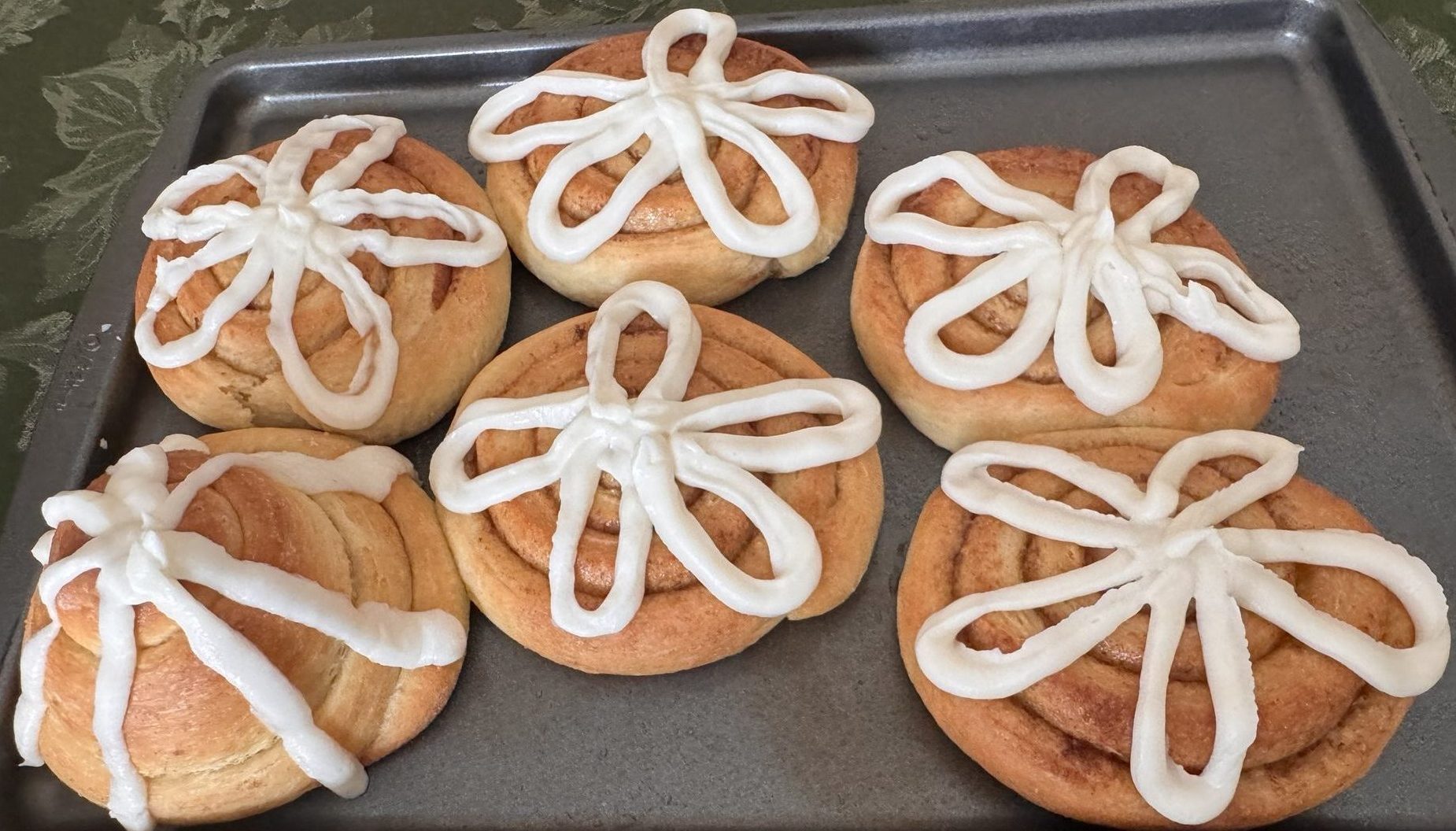
Homemade frosting is one of those wonderfully versatile foods that doesn’t get nearly enough credit. It’s easy to make and goes on all the kids’ favorite treats. Plus, frosting can be turned into a great edible playdough for fun fine motor and sensory activities that the whole family can enjoy.
Now, I want to be upfront: frosting is a treat food. It’s not something we want our kids eating every single day, and I’m not here to pretend otherwise. But when we do enjoy it, I’d much rather make it from scratch. And I’m going to share my reasons in this post.
Here’s something that surprised me when I started paying attention: frosting isn’t just for birthday cakes. I was surprised by how many foods actually contain frosting; it’s a lot. And for a long time, I gave my kids these foods regularly.
When I was a kid, we ate cereal for breakfast every day, and guess what? The majority of cereals have “frosting” all over them. Just to name a few:

- Frosted Flakes
- Frosted Cheerios
- Frosted Mini Wheats
- Frosted Rice Krispies
- Malt O Meal
- Lucky Charms
- Captain Crunch
Then there’s the other “breakfast” foods we grab and go with:
- Breakfast Loaves (Banana Bread, Zucchini Bread, Pumpkin Bread)
- Cinnamon Rolls
- Muffins (Lemon, Orange)
- Coffee Cake
- Doughnuts
- Toaster Pasteries
- Honey Buns
- Danish
- Scones

So when my kids have a bowl of Frosted Mini-Wheats at breakfast and a toaster pastry as a snack, they’ve already had frosting twice before lunch, and I haven’t even realized it. Frosting appears on so many of our favorite pastries and goes so well with coffee that we hardly think about the type of frosting we are adding to what may be a healthy snack, like blueberry muffins or banana bread.
So what makes homemade frosting any better than the frosting you get from the store or the frosting that comes in your favorite honey bun?
What’s in Homemade Frosting?
Let’s be honest about what homemade frosting is: it’s primarily butter and powdered sugar, which means it’s high in saturated fat and sugar, low in protein, and contains essentially no fiber or micronutrients. There’s no spinning that into a health food.

But here’s where it gets interesting. When you make your own frosting, you control what goes into it, and that creates options that can make meaningful adjustments to your health.
- Control the sugar. You can reduce the amount of powdered sugar to your own taste, or make your own powdered sugar by blending cane sugar with a small amount of cornstarch in a food processor. This also means you can swap in monk fruit extract to create a lower-glycemic version.
- Swap the fat. Replace butter with cream cheese for a tangy, slightly higher-protein alternative, or try coconut cream for a dairy-free option.
- Change the liquid. Instead of heavy cream, experiment with almond milk, oat milk, or coconut milk to adjust flavor and dietary fit.
- No preservatives, no artificial dyes, no emulsifiers. That alone is a significant upgrade.
The different options homemade frosting offers are versatile and do impact the frosting’s nutrition. The point isn’t that homemade frosting is healthy; it’s that it’s a cleaner, more customizable, and better version of something your family is probably already eating regularly.
Store-Bought Frosting Concerns

Store-bought frosting is easy and convenient. Personally, I use it when we are traveling for the holidays, making our traditional decorations like gingerbread houses, Santa’s cookies, and playdough. But it isn’t something my family eats anymore. There are a few ingredients found in common frosting brands that I’m not comfortable having my family eat.
Hydrogenated Oils and Trans Fat
In 2018, the FDA officially banned partially hydrogenated oils (PHOs) from food due to their trans fat content, which has been linked to a wide range of health problems. This caused many frosting manufacturers to reformulate using fully hydrogenated oils, which do not contain trans fat.
However, it is extremely important to read labels; even if a product suggests 0g of trans fat, it may contain small traces as allowed by the FDA according to serving size. The FDA allows products to be labeled as containing “0g trans fat” if they contain less than 0.5 grams per serving.
Hydrogenated oils are high in saturated fats; these are still not healthy to consume in large quantities and can still cause unbalanced cholesterol. Some types of hydrogenated oils include soybean oil or palm oil. They can also be blended with other oils to make shortening or margarine. So while a certain percentage per serving might be acceptable, that doesn’t make it beneficial or risk-free.
We all know we eat more than one serving, so knowing that trace amounts of these ingredients can be found in each serving means our consumption may be more than what it should be. I have found it best just to stay away from these ingredients. And I think more and more of us are realizing how extremely important it is to read labels and research ingredients.
Titanium Dioxide
One ingredient that might surprise you is titanium dioxide. It’s used in many frostings and icings as a whitening agent to make colors appear brighter and more vivid.
The European Food Safety Authority (EFSA) conducted an updated safety assessment and concluded that E171 can no longer be considered safe when used as a food additive. The European Commission moved to ban it, and honestly, we should too. The concerns center on the fact that while the EFSA opinion does not definitively conclude that E171 is a health risk, it does not rule out the possibility either. Titanium Dioxide is being studied for its possible effects on our DNA, with the studies working to definitively determine whether it could cause DNA or chromosomal damage.
That’s a big no for me.
The FDA has not moved to ban titanium dioxide in the United States; currently, it’s regulated to less than 1% of the product’s weight. This is one of the reasons we made it a habit to make frosting myself, and if I need to buy it, I will read the labels.
TBHQ (tert-Butylhydroquinone)
If you’ve ever checked the nutrition label on the back of your favorite cupcake frosting, you’ve probably seen TBHQ. It’s a synthetic antioxidant used to prevent fats and oils from going rancid, which is what gives these foods their shelf life.
The FDA and European Union permit TBHQ up to a limit of 0.02% of the food’s oil or fat content, but the research is more complicated. In the studies of very high doses amongst lab animals, TBHQ has been linked to early signs of stomach tumors and DNA damage, and prolonged exposure at high doses may be carcinogenic. A more recent study by the Environmental Working Group suggested that many popular preservatives, including TBHQ, may cause harm to the immune system.
The scientific picture on TBHQ is genuinely mixed, and although its use is regulated, I’m also not in a rush to feed my kids something that keeps showing up in health studies that question whether these ingredients are depleting our health and causing serious harm later in life. Especially when I can avoid it by making something at home.
Frosting in Pre-packaged Foods
Not only does the frosting in pre-packaged food typically contain all the same ingredients as the store brand frosting, but it also contains a significant amount of synthetic dyes. These dyes are petroleum-based and exist purely for appearance.

Research from Ohio State University’s medical center has found that food dyes can make some children and teenagers hyperactive, moody, or irritable. The researchers were careful to note that food dyes don’t cause disorders like ADHD, but they can make those conditions worse for children who are already susceptible. Ohio State Health & Discovery
In 2025, when the FDA announced the phase-out of all petroleum-based synthetic dyes from our food supply, I was excited. It felt like we were finally making the first step towards fixing our chronic health problems that have been linked to our industrial food. They discussed removing FD&C Green No. 3, Red No. 40, Yellow No. 5, Yellow No. 6, Blue No. 1, and Blue No. 2 from the food supply. As of now, it remains in a lot of grocery store snack foods, including the frosted baked goods.
However, there is a catch. The FDA is not issuing a ban; instead, it is asking food manufacturers to comply voluntarily. Because using synthetic food dyes has always been voluntary. This is why I don’t think we can simply wait for industry to act. Reading ingredient labels isn’t just a good habit; it’s an essential practice towards maintaining good health, and one of the most powerful tools we have right now. If these products are not purchased, they won’t be manufactured.
The Overall Picture of Frosting
I’ve thought about this a lot. And I really don’t believe sugar alone is the villain in our food system. A frosted birthday cake or a batch of homemade cinnamon rolls on a Sunday morning, those aren’t the problem. Treats have always been part of family life, and I think that’s completely fine.

In our house, we make treats together for good report cards, finishing chores, or trying a new food at dinner. Those moments matter, and the sugar in our homemade frosting is the least of my concerns when I’m watching my kids proudly frost their own cupcakes.
What does concern me is the cumulative load of additives, preservatives, and synthetic chemicals that show up in the processed versions of those same treats. I’m reminded that it wasn’t so long ago that smoking while pregnant was considered acceptable. Until we discovered the impact these chemicals had on developing babies, it was not hard for me to imagine similar circumstances with highly processed foods containing high concentrations of additives and preservatives.
Our understanding of what we put into our bodies keeps evolving, and I’d rather err on the side of caution and use whole, recognizable ingredients in as many of my family’s foods as possible. While we wait for science to catch up. So for now, teaching our kids to read labels and ask questions about what’s in their food is, what I believe, one of the most valuable life skills we can give them.
So here’s a simple recipe for homemade frosting.
Homemade Frosting
Equipment
- 1 Electric Mixer
- 1 Cake Decorating Pouch
Ingredients
- 8 tbsp Unsalted Butter Softened
- 4 1/2 cups Powdered Sugar
- 3 tbsp Organic Whole Milk
- 1 1/2 tsp Vanilla extract
Instructions
- In a large mixing bowl combine powdered sugar and softened butter until no lumps are visible
- Stir in milk and vanilla extract and mix until smooth
- Scoop or pour mixture in a pouch for decoration
Notes
 Once you have your base frosting, a few drops of food-grade essential oil or some fresh zest can take it in a completely different direction. Here are some of our favorite combinations:
- Lavendar Frosting with Blueberry Muffins
- Orange Frosting with Cranberry scones
- Lemon Frosting with Poppyseed or Pumpkin Loaf
Disclosure: Some of the links in this post are ‘affiliate links’. This means if you click on the link and purchase the item, I will receive an affiliate commission.
Sources
Synthetic Food Dyes
- U.S. Food & Drug Administration. (April 22, 2025). HHS, FDA to Phase Out Petroleum-Based Synthetic Dyes in Nation’s Food Supply. https://www.fda.gov/news-events/press-announcements/hhs-fda-phase-out-petroleum-based-synthetic-dyes-nations-food-supply
- Center for Science in the Public Interest. (2025). FDA’s ‘Plan’ to Remove Food Dyes: Industry ‘Understanding’. https://www.cspi.org/cspi-news/fdas-plan-remove-food-dyes-industry-understanding
- Ohio State Health & Discovery. Food Dyes and Child Behavior. https://health.osu.edu/health/children-and-infants/food-dyes-and-child-behavior
- U.S. Food & Drug Administration. (Updated December 2025). Tracking Food Industry Pledges to Remove Petroleum-Based Food Dyes. https://www.fda.gov/food/color-additives-information-consumers/tracking-food-industry-pledges-remove-petroleum-based-food-dyes
Titanium Dioxide (E171)
- USDA Foreign Agricultural Service. (March 2022). European Union: Titanium Dioxide Banned as a Food Additive in the EU. https://www.fas.usda.gov/data/european-union-titanium-dioxide-banned-food-additive-eu
- European Commission / DG SANTE. (January 2022). Goodbye E171: The EU Bans Titanium Dioxide as a Food Additive. https://ec.europa.eu/newsroom/sante/items/732079/en
- U.S. Right to Know. (Updated 2025). Titanium Dioxide: Banned in Europe, One of the Most Common Food Additives in the U.S. https://usrtk.org/chemicals/titanium-dioxide/
- PubMed / National Library of Medicine. (2024). The Implications of the EU Ban on Titanium Dioxide: A Comprehensive Review of Safety Concerns and Alternatives. https://pubmed.ncbi.nlm.nih.gov/39549786/
TBHQ (tert-Butylhydroquinone)
- Environmental Working Group. (March 2021). Study: Preservative Used in Pop-Tarts and Hundreds of Popular Foods May Harm the Immune System. https://www.ewg.org/news-insights/news-release/study-preservative-used-pop-tarts-and-hundreds-popular-foods-may-harm
- Wikipedia. tert-Butylhydroquinone — Regulatory Status and Safety Data (citing FDA, EFSA, JECFA). https://en.wikipedia.org/wiki/Tert-Butylhydroquinone
Hydrogenated Oils & Trans Fat
- U.S. Food & Drug Administration. (2018). Final Determination Regarding Partially Hydrogenated Oils. https://www.fda.gov/food/food-additives-petitions/final-determination-regarding-partially-hydrogenated-oils
Ingredient Label Tools
- Environmental Working Group. EWG Food Scores Database — search any packaged food by name or barcode. https://www.ewg.org/foodscores
Photo Credits:
Photo by Haley Owens, Ann Flaherty, Brett Wharton on Unsplash
Original Photos by Suburban Homesteads LLC

Leave a Reply