Rethinking the Cleaning Isle
When I think about cleaning my house, I sometimes cringe. Have you seen the cleaning aisle at the store lately? In my growing suburban town, I’ve watched our local Target expand its cleaning section to almost four full aisles, and that’s not even counting personal hygiene products. That’s just household cleaners.
It’s gotten me questioning some things I use in my house: tub cleaners, sanitizers, and bleach. As I started reading the labels on my household cleaners, I realized there were so many chemicals in my cleaning supplies.

I just thought, why? Why did we need so many ingredients to make something that cleans the house? And why does everything need its own cleaner? I mean, you can’t pronounce half the ingredients, let alone explain what they’re for.
The Reality Check
That question led to bigger questions: is bleach the best chemical for the job, or does it do more harm than good? Is sanitizing everything with antibacterial cleaners actually helping us, or hurting us? And if I switch to natural cleaners, is my house even getting clean?
In reality, I’m barely keeping up with surface cleaning most weeks, let alone deep cleaning. My real deep-cleaning sessions usually happen over the holidays, when I’m actually home with my family for a few days. It sounds backwards, but I try to use that time well and turn it into a lesson on responsibility for my kids. It’s a chance to teach them HOW to clean, the importance of chores, and taking care of a home. Basically, I make deep cleaning a family event. And because my family is involved at all ages, I wanted to make sure they were using something that isn’t harmful.
That realization led to a recent purge of a lot of my cleaning supplies. Now, I’m not really the kind of person to switch from one brand to another. I’m more interested in finding ingredients I understand and trust that can supplement or replace what’s under my sink. So I did some digging…
The Bleach and Antibacterial Question
On the antibacterial side, the science actually backs up the instinct that “more antibacterial” isn’t automatically better. In 2016, the FDA banned 19 active ingredients in many cleaners, including triclosan, one of the most common antibacterial agents in soaps. Manufacturers couldn’t prove it worked any better than plain soap and water, and some data suggested the ingredients could do more harm than good with long-term use. But this change only affected soaps, which led to an important habit worth building: reading the labels of everything, not just food. There are plenty of cleaning products out there that are “antibacterial” without being classified as soap, like sanitizer.
Bleach is a murkier story. Some research suggests it lowers the rates of certain respiratory conditions, while other research suggests it contributes to chronic conditions. The research hasn’t made the decision any easier, because there’s still no definitive good-versus-bad answer. The one thing it does agree on is consistent respiratory irritation. The remedy suggested is ventilation: crack a window, run a fan, don’t linger in the fumes while cleaning.
Bleach Warnings
Bleach isn’t a product for young children to use, and honestly, I wouldn’t start teaching mine to use it until they’re a teenager, if ever. It may affect their little lungs, since bleach is classified as an asthmagen (meaning it can actually cause asthma with repeated exposure, not just trigger it).
That being said, there are some rules for using bleach if that’s what you choose. We’ll get to the benefits and uses of vinegar shortly, but it should never be mixed with bleach. Nor should ammonia, which is another common cleaning agent. Bleach and vinegar react to release chlorine gas, and bleach and ammonia produce chloramine vapors. Vinegar and hydrogen peroxide shouldn’t be combined either. Together, they form peracetic acid, which is corrosive and irritating to the skin, eyes, and lungs in a home spray bottle. Any of these combinations is dangerous to breathe, even in a well-ventilated room.
So where does that leave us? Bleach has been marketed as both the villain and the miracle disinfectant across every corner of the internet. But the truth is it’s a strong tool, not without faults. I believe bleach was designed for commercial cleaning. It deserves the same respect commercial cleaning agents get. I try to avoid it myself, mostly because I’m usually cleaning in a hurry and have a habit of forgetting things, like gloves or turning on the fan. That might just be my personality, or it might be the ADHD talking, but either way, bleach has become a once-in-a-while cleaner in our house rather than a household staple.
Castile Soap: MVP
Castile soap is still our best friend, even outside of personal care. You might remember that we use diluted castile soap as shampoo, and castile bar soap as part of our homemade laundry detergent.
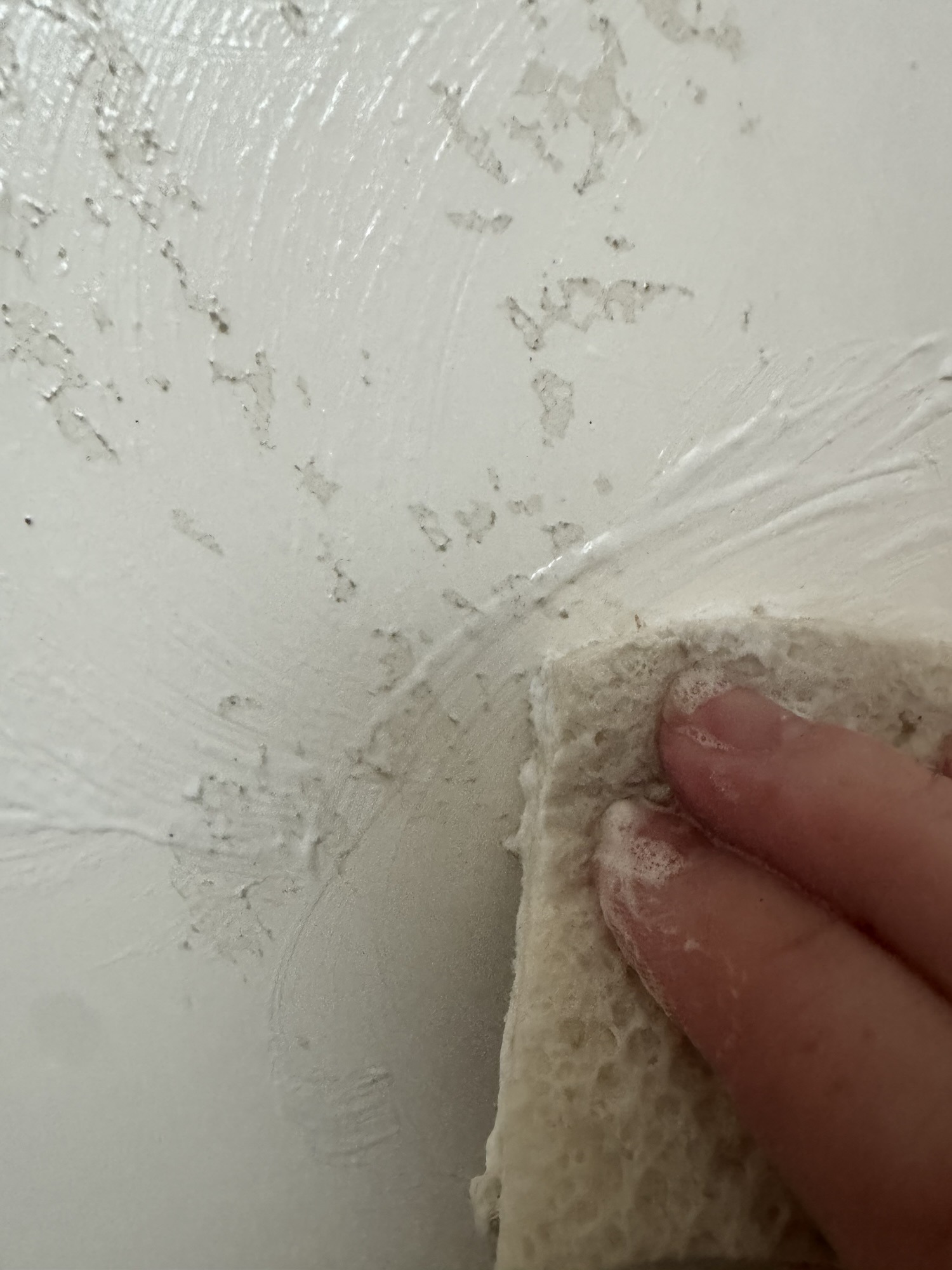
We also reach for it when we hand-wash dishes, scrub floors and tubs, or scrub marker and crayon off the walls from our resident little artists.

I’m not here to tell you it replaces every chemical-based cleaner in your house. But from my own experience, it can replace a lot of them, and it’s gentle enough to use with kids. So when my little artists get in trouble for coloring all over their bedroom walls, I hand them a sponge and tell them to scrub it off, without worrying about what’s landing on their skin. I’ll never forget handing my kids that sponge the first time, watching their faces as the marker just started disappearing off the wall. Castile soap is gentle enough to wash off their skin without irritation or peeling, so I could let them do the scrubbing themselves.

For bigger jobs, instead of diluted bleach, I mix concentrated liquid castile soap with baking soda until it forms a paste, keeping it spreadable, not runny.
I spread a thin layer over any stubborn spot, let it sit for about 10 minutes, then come back and scrub. I’m not spending 10 minutes scrubbing the same spot anymore; a few strokes of elbow grease and the mark lifts away.
The Grease-Fighting Paste Recipe
- 2 tablespoons baking soda
- 1 tablespoon eucalyptus castile soap
The same paste works on those dingy spots in the tub from the “blue-collar men” in our lives. It whitens just as well as bleach, in my opinion, and I don’t have to worry about it touching my clothes, floor, or skin. It rinses away easily because the ingredients are actually made for skin contact.
I use the same mixture on greasy pans in the kitchen. I let the paste sit on the stuck-on grease for about 10 minutes, then scrape the gunk off without having to scour the pan. As a bonus, the baking soda deodorizes the sink at the same time.

(Quick note on this combo. Baking soda is a mild abrasive, so while it’s gentle enough for tubs, pans, and painted walls, it’s not the right choice for surfaces that scratch easily. Like polished stone or some finished woods.)
Vinegar and Tea Tree Oil for Surfaces
For everyday surfaces, we use diluted cleaning vinegar with about 20 drops of tea tree oil. Tea tree is an oil known for its antibacterial properties. It’s perfect on the kitchen counter and table where we prep most of our food. We use the same mix on bathroom counters and the toilet, and even on windows for a streak-free shine.

Because I want to be transparent, here are some limitations to this mixture:
- Vinegar cleans, but it isn’t a registered disinfectant. It has real antibacterial activity in lab settings, but it hasn’t met the EPA’s standards for germ-kill claims. It’s much less reliable against viruses.
- Vinegar isn’t safe on every surface. Its acidity can etch and dull natural stone. Our home was a rental before we bought it, so you won’t find stone counters here. But if you own granite, marble, limestone, or travertine, vinegar shouldn’t be your first choice. It can degrade grout and some sealed hardwood finishes with consistent use.
- Tea tree oil and pets don’t mix. This one surprised me. I didn’t think essential oils were harmful as long as you didn’t ingest them. Tea tree oil is one of the most common sources of essential-oil toxicity reported in pets. So be mindful of where you use it if you share your home with a dog or cat.
Disinfecting Alternatives
An alternative to tea tree, vinegar, and bleach is a natural sanitizer. Having one on hand comes in handy when you need a true disinfectant.
One option is 70% isopropyl alcohol mixed with a few drops of essential oil. At that concentration, isopropyl alcohol is a legitimate disinfectant recognized by the CDC.
During the early days of COVID, mixing vodka into a spray bottle was the stand-in for hand sanitizer. It was a common workaround, even in my house: wiping down doorknobs, counter-tops, and even little hands. Looking back, that last one probably wasn’t great for their skin. But the experience taught us a lot about the overuse of sanitizer.

It made sense at the time; store shelves were empty, and people were desperate. But standard vodka is only about 40% alcohol, and a true disinfectant needs to hit 60% to actually kill germs. It was a well-meaning swap, but it’s not the disinfectant it was made out to be.
Alcohol Cautions
The isopropyl alcohol solution is a well-documented disinfectant. It can be used on handles, feeders, doorknobs, and bathroom fixtures. I wouldn’t use it on your food prep surfaces, since isopropyl alcohol isn’t meant to be ingested.
Best Disinfectant in Our Home
If isopropyl alcohol feels like too harsh a step for a house full of little hands, use hydrogen peroxide. Standard 3% hydrogen peroxide is worth keeping in your cabinet instead. It’s the same bottle you probably already have for scraped knees, and it’s a hospital-grade disinfectant. It’s effective against things like Norovirus, Salmonella, and the flu virus when you let it sit on a surface for about 10 minutes before wiping.
What makes it the option I feel best about is what it breaks down into: just water and oxygen. No fumes, no rinse required, no worrying about a curious toddler licking a counter-top five minutes after I’ve wiped it down. That also makes it my go-to for actual food-prep surfaces, cutting boards, the sink, and anywhere raw meat has touched. I don’t have to treat it as something to rinse away before food comes near it, the way I do with isopropyl alcohol.
A note on storage: hydrogen peroxide breaks down in light, which is why it comes in a brown bottle. Keep it in that bottle rather than transferring it to a clear spray bottle, or it’ll lose its effectiveness. And like bleach, it can lighten colored fabric or grout, so be careful where you use it. It’s mild, but it’s still not something for kids to handle unsupervised. But it’s much more forgiving than bleach if it does end up on their hands.
Final Thoughts
None of this means natural cleaning is automatically “better,” or conventional cleaning is automatically “worse.” It means read the labels, understand what a product can and can’t actually do, and be aware of the pros and cons of cleaning products around kids. We want to teach them young, so use the best options for their health.
I will opt for cleaners I understand before I buy a bottle of something I don’t understand. I’ll use hydrogen peroxide when I need real germ-killing power, castile soap and baking soda for everyday scrubbing, and vinegar for grime and shine where it’s safe to use.
But the best part of all of this is learning to trust my instincts rather than convention. Teaching my kids to do the same. Handing my kids a sponge and watching them take pride in the work, picking up on habits that are not just responsibilities, but sustainable habits.

Habits I hope stick with them for good. We watch a wall go from a masterpiece to a clean slate. And I know that’s a lesson worth passing down.
Disclosure: Some of the links in this post are ‘affiliate links’. This means if you click on the link and purchase the item, I will receive an affiliate commission.
Resources
- Healthline (medically reviewed) Is Mixing Bleach and Vinegar Dangerous?https://www.healthline.com/health/bleach-and-vinegar
- Healthline (medically reviewed) Bleach and Ammoniahttps://www.healthline.com/health/bleach-and-ammonia
- FDA Skip the Antibacterial Soap; Use Plain Soap and Water https://www.fda.gov/consumers/consumer-updates/antibacterial-soap-you-can-skip-it-use-plain-soap-and-water
- CDC/ATSDR ToxFAQs for Chlorine https://www.atsdr.cdc.gov/toxfaqs/tfacts172.pdf
- CDC Chlorine (NIOSH topic page) https://archive.cdc.gov/www_cdc_gov/niosh/topics/chlorine/default.html
- Clorox Safety Data Sheet (via Duke University EHS) https://www.safety.duke.edu/sites/default/files/Bleach_Clorox.docx
- EPA List N: Disinfectants for Use Against SARS-CoV-2 https://www.epa.gov/pesticide-registration/list-n-disinfectants-coronavirus-covid-19
- Texas A&M College of Veterinary Medicine & Biomedical Sciences “Dangers of Essential Oils” https://vetmed.tamu.edu/news/pet-talk/could-your-pet-benefit-from-essential-oils/
- BMC Veterinary Research (peer-reviewed case study) https://pmc.ncbi.nlm.nih.gov/articles/PMC6995176
- Journal of Veterinary Emergency and Critical Care “Adverse reactions from essential oil-containing natural flea products” (PubMed) https://pubmed.ncbi.nlm.nih.gov/22805458/
- EPA List N: Disinfectants for Use Against SARS-CoV-2 https://www.cdc.gov/infection-control/hcp/disinfection-sterilization/chemical-disinfectants.html
- EPA List N: Disinfectants for Use Against SARS-CoV-2: https://www.epa.gov/coronavirus-and-disinfectants/what-emerging-viral-pathogen-claim
- EPA List G: Registered Hospital Disinfectants Effective Against Norovirus https://19january2021snapshot.epa.gov/sites/static/files/2016-06/documents/list_g_norovirus.pdf
- https://alliancechemical.com/blogs/news/mixing-hydrogen-peroxide-vinegar-peracetic-acid


Leave a Reply